
- December 18, 2025
- Posted by: admin
- Category: Uncategorized
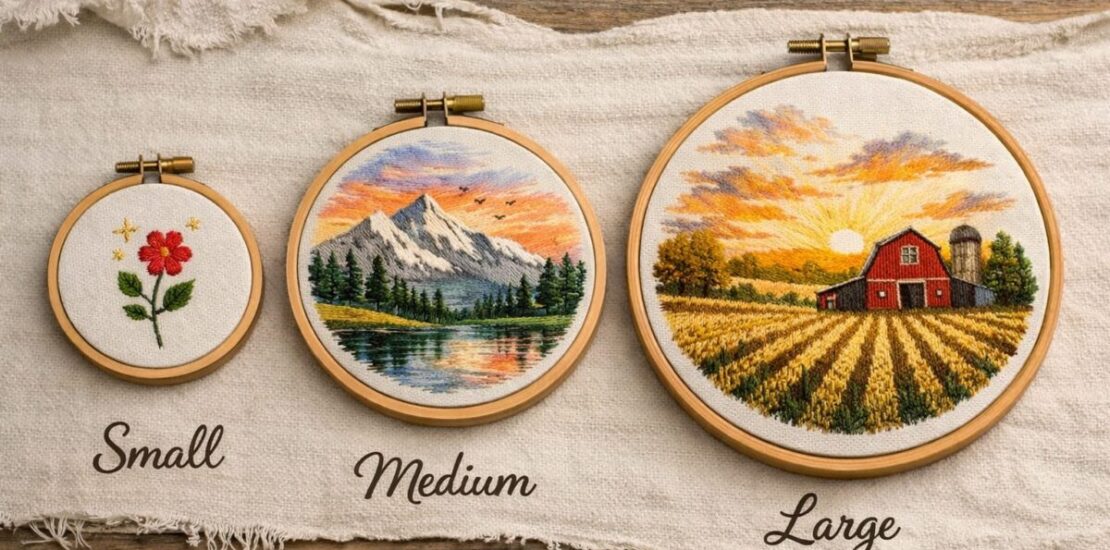
Embroidery hoop size plays a critical role in stitch quality, fabric stability, design accuracy, and overall production efficiency. Whether you are running a commercial embroidery machine or working on custom logo digitizing, choosing the right embroidery hoop size can be the difference between a clean, professional finish and costly production errors.
In this guide, we’ll explain embroidery hoop sizes, how they affect stitch quality, common mistakes to avoid, and how to choose the best hoop for different embroidery projects. Modern embroidery machines from brands like Brother Embroidery Machines support multiple hoop sizes and high-speed production.
What Is an Embroidery Hoop?
An embroidery hoop is a frame that holds fabric tight and stable while the embroidery machine stitches the design. The hoop prevents fabric movement, puckering, distortion, and thread breaks. High-quality embroidery threads play an important role in stitch consistency and durability. Brands like Madeira Embroidery Threads are widely used in professional embroidery production.
There are different hoop sizes, shapes, and types, each designed for specific embroidery applications like:
-
Left chest logos
-
Jacket backs
-
Caps
-
Patches
-
Large decorative designs
Why Embroidery Hoop Size Matters for Stitch Quality
Choosing the wrong hoop size can cause multiple embroidery problems, including:
-
❌ Fabric shifting during stitching
-
❌ Puckering or wrinkling
-
❌ Distorted or stretched designs
-
❌ Thread breaks and needle deflection
-
❌ Poor registration in multi-color designs
Correct hoop size = stable fabric + clean stitches + professional output.
Common Embroidery Hoop Sizes Explained
Below are the most commonly used embroidery hoop sizes and their best use cases:
1. Small Hoop (100 × 100 mm / 4″ × 4″)
Best for:
-
Left chest logos
-
Cap side logos
-
Small patches
-
Name embroidery
Advantages:
-
Maximum fabric tension
-
Best stitch accuracy
-
Ideal for high-detail designs
Limitations:
-
Not suitable for large or wide designs
👉 Pro Tip: Always use the smallest hoop possible that fits your design.
2. Medium Hoop (130 × 180 mm / 5″ × 7″)
Best for:
-
Polo shirts
-
Small jacket logos
-
Medium patches
Advantages:
-
Balanced tension and coverage
-
Suitable for most commercial embroidery jobs
Limitations:
-
Less stability for very small designs compared to 4×4 hoops
3. Large Hoop (200 × 300 mm / 8″ × 12″)
Best for:
-
Jacket backs
-
Hoodie designs
-
Large decorative embroidery
Advantages:
-
Covers large design areas
-
Reduces re-hooping time
Limitations:
-
Fabric tension can reduce if not hooped correctly
4. Extra-Large Hoop (360 × 200 mm / 14″ × 8″)
Best for:
-
Full jacket backs
-
Large lettering
-
Custom artwork
Advantages:
-
Perfect for oversized designs
-
High productivity for bulk orders
Limitations:
-
Requires proper stabilizer selection
-
Higher risk of fabric movement
Round vs Rectangular Embroidery Hoops
Round Hoops
-
Best for small logos
-
Uniform tension
-
Easy to align
Rectangular Hoops
-
Best for wide designs
-
Jackets and patches
-
More design flexibility
👉 Digitizing Tip: Always digitize designs according to the hoop shape to avoid unnecessary jumps and trims.
Hoop Size Selection Based on Fabric Type
Lightweight Fabrics (Cotton, Polyester)
-
Use smaller hoops
-
Avoid over-stretching fabric
Heavy Fabrics (Denim, Jackets)
-
Medium to large hoops
-
Strong stabilizer required
Stretch Fabrics (Performance Wear)
-
Hoop gently
-
Use cut-away stabilizer
-
Avoid oversized hoops
Embroidery Hoop Size for Patches
Patches require extra stability because they are embroidered without garment support.
Recommended hoop sizes for patches:
-
Small to medium hoops
-
Tight hooping
-
Heavy cut-away stabilizer
For professional custom patches, hoop size must match patch shape and border style.
👉 Related service:
Custom Embroidery Patches – https://gsh.tzd.temporary.site/custom-embroidery-patches/
Hoop Size vs Digitizing Quality
Even the best embroidery digitizing can fail if the hoop size is wrong.
Good digitizing + wrong hoop = poor results
A professional digitizer:
Professional digitizing software like Wilcom embroidery software helps maintain stitch accuracy, stitch density, and overall design quality.
-
Considers hoop size before digitizing
-
Adjusts stitch density accordingly
-
Controls pull compensation
👉 Learn more about professional digitizing:
Embroidery Digitizing Services – https://gsh.tzd.temporary.site/embroidery-digitizing-services
Common Hoop-Related Mistakes to Avoid
-
❌ Using a large hoop for a small logo
-
❌ Over-stretching fabric while hooping
-
❌ Incorrect stabilizer selection
-
❌ Ignoring grain direction
-
❌ Poor hoop alignment
How to Choose the Right Hoop (Quick Checklist)
Before hooping, ask yourself:
✔ What is the design size?
✔ What is the fabric type?
✔ Is the design dense or light?
✔ Does the design include small text?
✔ Am I using the correct stabilizer?
Expert Tips for Perfect Stitch Quality
-
Always test stitch on scrap fabric
-
Use magnetic hoops for consistency
-
Re-tighten hoop screws regularly
-
Keep hoop clean to avoid fabric slippage
-
Match hoop size with digitized design
Final Thoughts
Understanding embroidery hoop sizes is essential for achieving perfect stitch quality, clean embroidery, and professional results. Whether you’re running a commercial embroidery business or ordering custom digitizing services, selecting the correct hoop size saves time, reduces errors, and improves customer satisfaction.
If you want flawless embroidery results, always combine:
-
Correct hoop size
-
Proper stabilizer
-
Professional digitizing